
Across Canada, climate change is no longer a distant or theoretical issue. It is a present-day reality actively reshaping how homes must be designed, constructed, and protected for the future. Rising extreme rainfall, outdated stormwater infrastructure, increasing flood risks, and growing insurance losses are forcing homeowners, builders, and policymakers to reconsider long-standing construction norms. One of the most significant elements under scrutiny today is the traditional basement.
For decades, basements were considered a standard part of Canadian residential construction. They provided additional storage, mechanical space, and sometimes finished living areas. However, as environmental conditions shift and weather events intensify, what was once viewed as a practical feature is now being re-evaluated as a potential vulnerability.
At Gobind Builders, we believe modern Canadian home design must evolve alongside environmental realities. Homes should not only provide comfort and functionality but also reflect resilience and long-term sustainability. As the conversation around basement-free housing grows, underground capsule storage is emerging as a smarter alternative that offers functionality without the risks associated with full underground living spaces.
Recent flooding events across Ontario, Quebec, and parts of Western Canada have revealed how quickly infrastructure can be overwhelmed by intense rainfall. Billions of dollars in insured losses have been recorded, with basement flooding accounting for a large share of residential damage claims.
Climate experts warn that storms historically considered “once-in-a-century” events may now occur every few decades due to evolving weather patterns. Because basements are positioned below grade, they are especially vulnerable to groundwater pressure, sewer backups, and overwhelmed municipal drainage systems.
As climate change in Canada continues to intensify rainfall events, basement flooding is becoming less of an exception and more of an expected risk. This shift is encouraging the construction industry to prioritize flood-resilient housing design that anticipates future conditions rather than relying on outdated assumptions rooted in past environmental stability.
Beyond structural risk, basements are increasingly becoming a financial liability. Rising home insurance premiums, limited flood coverage, and repeated repair costs are influencing how homeowners evaluate long-term investments.
Water damage remains one of the most expensive residential claims. Homes with repeated flooding history often face reduced property value stability and increased maintenance costs. As a result, design choices that minimize flood exposure are gaining importance in both construction planning and real estate markets.
Forward-thinking sustainable housing solutions are no longer just environmentally responsible, they are economically strategic, helping homeowners avoid costly surprises while ensuring lasting value.
Municipalities such as Montreal have begun discouraging basement construction in flood-prone areas as part of broader climate-resilient urban planning strategies. Experts in sustainable construction emphasize that modern housing should minimize predictable environmental risks wherever possible.
This shift does not mean reducing livable space but rather redefining how underground space is used. Instead of creating large underground rooms that may become vulnerable to flooding, newer design strategies focus on resilience, efficiency, and intentional use of materials.
Modern climate-adaptive building standards prioritize durability, environmental responsibility, and lower long-term maintenance costs over unnecessary expansion below grade.
Basements also contribute significantly to a home’s carbon footprint. Studies on embodied carbon in construction indicate that below-grade structures often account for a substantial portion of total material use.
The extensive use of reinforced concrete, heavy excavation, and waterproofing systems increases construction emissions. Concrete remains one of the most carbon-intensive building materials, and large basements built primarily for storage consume resources disproportionate to their functional value.
As sustainable home construction in Canada becomes a priority, reducing unnecessary excavation is an effective way to lower environmental impact while aligning with climate-conscious building practices.
Historically, basements were necessary to extend foundations below the frost line. Today, engineering advancements offer alternatives such as slab-on-grade foundations, pile foundations, and insulated shallow foundations that provide structural stability without extensive underground living areas.
Countries like Australia and regions within the United States have long embraced basement-free construction. These models demonstrate that homes can remain durable and comfortable while reducing flood risk and construction emissions.
Canada is now gradually exploring these approaches as part of its transition toward future-ready residential design and climate-adaptive housing solutions.
Canadian lifestyles remain seasonal, requiring storage for winter equipment, outdoor furniture, tools, and recreational gear. Eliminating underground space entirely is not always practical. The solution lies in rethinking how underground space is used rather than removing it altogether.
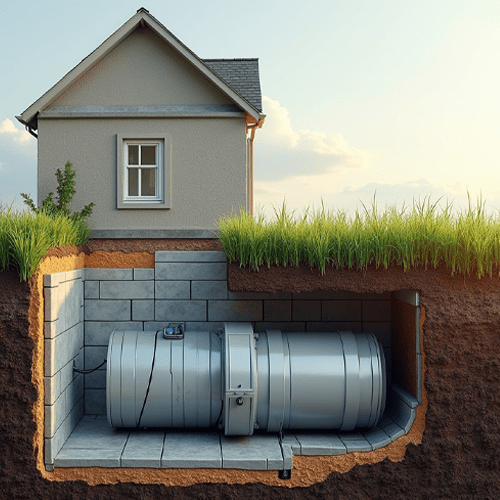
Underground capsule storage systems provide a strategic alternative to full basements. Instead of excavating large underground rooms, compact engineered storage capsules are installed below grade specifically for storage.
These systems are water-sealed, built for Canadian soil conditions, and designed to withstand freeze-thaw cycles. Because they require less excavation and concrete, they reduce both flood exposure and construction-related carbon emissions.
Most importantly, they offer secure underground storage without creating flood-prone living areas, making them ideal for climate-resilient Canadian homes.
For homeowners seeking future-proof home design, capsule storage offers balance. It maintains storage functionality while aligning with evolving building regulations, insurance expectations, and environmental priorities.
Rather than expanding underground living space, this approach reflects a design philosophy centered on precision construction, long-term resilience, and sustainable planning. Homes built with intentional underground storage remain safer, more efficient, and aligned with emerging climate-conscious trends.
As the housing industry evolves, homeowners are increasingly thinking beyond immediate construction costs and focusing on long-term performance, resilience, and future adaptability. Building a home today is no longer just about meeting present-day needs; it is about anticipating tomorrow’s environmental and economic realities. Design choices made at the construction stage can influence maintenance costs, insurance requirements, and even resale value decades into the future.
Homes that integrate climate-resilient construction strategies are better positioned to withstand unpredictable weather patterns and infrastructure limitations. By minimizing reliance on flood-prone underground living areas, homeowners can reduce their exposure to repair disruptions, structural damage, and recurring water-related risks. This approach contributes to greater property stability, especially in regions where flood events are becoming more common.
In addition, buyers are beginning to recognize the importance of sustainable home design and risk-aware construction. Features that improve environmental performance while maintaining functionality can enhance market appeal in an increasingly informed real estate landscape. As awareness of climate-adaptive housing grows, design elements such as underground capsule storage may become not just practical additions but competitive advantages.
By adopting thoughtful solutions that balance storage needs with environmental responsibility, homeowners can create spaces that remain functional, efficient, and resilient over time. This reflects a broader transition in Canadian residential design, one that prioritizes preparedness, durability, and smarter use of resources.
At Gobind Builders, our Capsule Underground Storage Solutions reflect our commitment to climate-conscious construction. Each project begins with careful site assessment, soil evaluation, and drainage analysis to ensure the most appropriate solution.
We believe homes should be built not only for present comfort but also for future environmental realities. By integrating sustainable residential design, risk reduction strategies, and practical storage innovation, we aim to help shape a stronger, safer future for Canadian communities.
Yes. Capsules are compact, sealed, and non-habitable, which makes them significantly less vulnerable to flood damage compared to full basements.
Absolutely. Capsule systems are engineered for freeze-thaw cycles, Canadian soil conditions, and seasonal temperature variations.
Yes. It adds functional storage and aligns with future-focused home design trends, making properties more attractive to environmentally and risk-conscious buyers.
Capsules are purpose-built storage units designed for protection, not habitation. They occupy less space and reduce environmental and flood risks.
Yes. Because they require less excavation and concrete, capsule systems have a smaller embodied carbon footprint, contributing to more sustainable home construction.
As Canada adapts to climate change, residential design must evolve. Moving away from high-risk, high-carbon basements toward intentional underground storage solutions represents a meaningful step forward.
The future of Canadian home construction lies not in building deeper, but in building smarter and more responsibly. At Gobind Builders, we are proud to support that future through innovative, resilient, and sustainable housing solutions designed for generations to come.

Building trust, quality, and communities across Canada through expert construction and personalized service.
Support
Connect With Us
- Alberta & British Colombia
- +1 778-721-8235
- info@gobindbuilder.com
Subscribe Us
Copyright © 2026 Gobind Builder . All rights Reserved.